
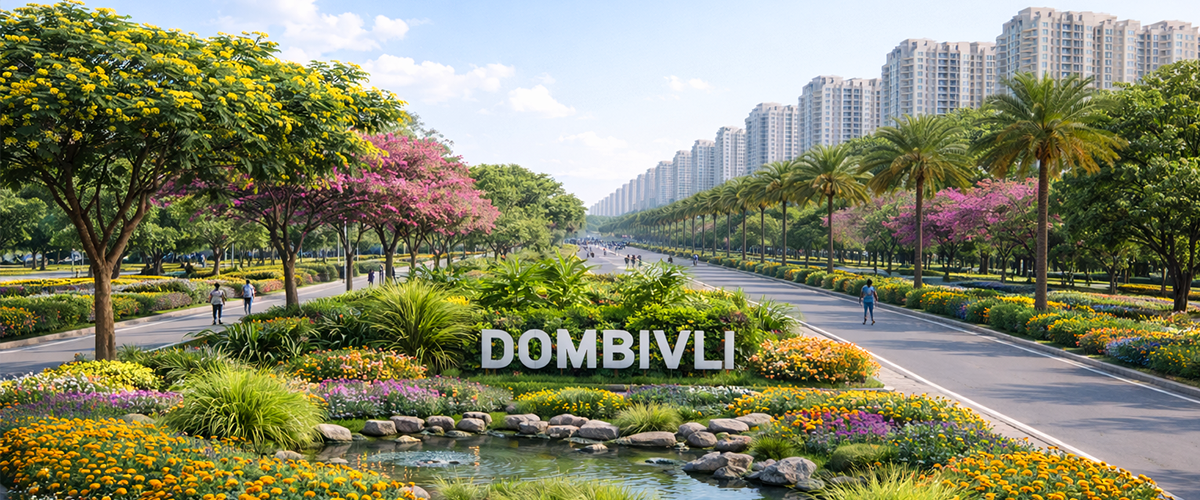
The evolution of suburban landscapes in the Mumbai Metropolitan Region is currently witnessing a profound shift toward environmental consciousness. As one of the most vibrant residential hubs, the focus on revitalizing the local ecosystem has become a cornerstone of modern urban planning. This movement transcends simple aesthetic improvements, aiming instead for a deep-rooted restoration of nature within our neighbourhoods. By thoughtfully integrating flora and fauna into the structural fabric of the city, urban planners are strengthening ecological balance in Dombivli while creating resilient spaces that deliver both psychological relief and tangible physical health benefits for all residents.
Restoring the Natural Heritage of the Region
For decades, the expansion of suburban zones often came at the cost of natural habitats. However, recent initiatives in both the East and West sectors are actively reversing this trend. The philosophy of “Biophilic Design” is now at the forefront, where architecture and nature blend seamlessly. This approach ensures that the “Concrete Jungle” is replaced by a “Living Landscape” that supports a wide variety of local bird species, butterflies, and beneficial insects.
Restoring regional rarities involves more than just planting trees; it requires the creation of “Stepping-Stone Habitats.” These are small patches of greenery, such as terrace gardens or roadside plantations, that act as ecological corridors. These lifelines allow local wildlife to migrate and thrive even amidst dense urbanization, ensuring that the biological heritage of the Kalyan-Dombivli belt remains intact for future generations.
The Power of Native Planting for Resilience
A critical factor in successful urban greening is the selection of indigenous species. Unlike exotic ornamental plants, native vegetation is perfectly adapted to the local climate and soil conditions of the region. Trees like the Banyan, Neem, and Peepal are not just culturally significant; they are powerhouse air purifiers that release oxygen and sequester carbon effectively.
| Native Species | Ecological Benefit | Aesthetic Value |
| Neem (Azadirachta indica) | Natural pest control & air purification | Dense green canopy for shade |
| Gulmohar (Delonix regia) | Supports local pollinators | Vibrant fiery red blossoms |
| Indian Almond (Deshi Badam) | Drought resistant & hardy | Broad leaves with autumn colors |
| Mogra (Arabian Jasmine) | Attracts butterflies & bees | Intoxicating evening fragrance |
Incorporating these species into private balconies and housing society gardens reduces the dependency on chemical fertilizers and heavy irrigation. These plants are naturally resilient to the monsoon cycles and high humidity, making them the ideal choice for creating a low-maintenance, high-impact green retreat at home.
Mitigating the Urban Heat Island Effect
One of the most pressing challenges of modern urbanization is the rising temperature in built-up areas. Extensive concretization leads to heat being trapped, creating a localized “Heat Island.” Strategic landscaping serves as a natural thermostat for the neighbourhood. By increasing the green cover, we can reduce ambient temperatures by 2 to 4 degrees Celsius, providing much-needed cooling during the peak summer months.
The implementation of “Green Infrastructure,” such as vertical gardens on building facades and reflective water bodies in public squares, plays a vital role in microclimate management. These features not only lower energy consumption for cooling but also improve the overall air quality by filtering out dust and pollutants. This commitment to eco-friendly living is turning the region into a role model for sustainable urban practices across the state.
Community Participation: The Heart of the Green Movement
The transformation of a city is never the result of isolated efforts; it requires the collective will of its citizens. From tree plantation drives led by local leadership to housing societies adopting organic waste management, the sense of environmental stewardship is growing. When residents take an active role in maintaining their local parks and gardens, they foster a stronger sense of social cohesion and belonging.
Engaging in “Citizen Science Initiatives,” such as recording local bird sightings or participating in seasonal biodiversity surveys, empowers the community to protect their natural surroundings. This participatory approach ensures that the development of new public spaces is inclusive and reflects the aspirations of the people who live there. Every small action from installing a bird bath to planting a single sapling contributes to a larger, healthier urban ecosystem.
Conclusion: A Vision for a Sustainable Urban Sanctuary
The journey toward a greener, more biodiverse environment is a continuous process of learning and adaptation. By prioritizing ecological health alongside infrastructure growth, we are building a city that nurtures both the body and the spirit. The future of the region lies in this perfect equilibrium between metropolitan convenience and suburban tranquility, where every street is a garden and every home is a sanctuary.
Join the Green Revolution for Ecological Balance in Dombivli
Ready to make a difference in your neighborhood? Start your own balcony garden today or join a local community planting drive. Let’s work together to create a thriving, biodiverse future for our city.
Visit: www.balaji-realty.com/projects/balaji-vrindavan | Call: +91 8530810246